
Documenting Wind and Storm Damage for a Wichita Claim
Wichita sits in a stretch of the Plains where spring and early summer bring genuine severe thunderstorm season, and more than a few of those storms carry tornado warnings even when no funnel ever touches down nearby. A rotating supercell pushing high sustained wind across a flat commercial roof does not need a confirmed tornado to do real damage, and that distinction matters when a claim gets filed: the roof does not care whether the warning was for a wall cloud or a touchdown, only whether the wind was enough to lift the membrane.
Wind damage on a low-slope roof usually starts at the edges. We check perimeter membrane attachment, edge metal and coping for looseness or displacement, and the seams closest to parapet walls and rooftop unit curbs, because that is where uplift pressure concentrates first. A membrane that looks fine across the open field can still be failing at the edge where the wind actually got underneath it.
Once wind gets under a membrane edge, it can propagate the tear inward, and that progression is part of what we document. We photograph the full extent of any lifted or torn section, measure how far the opening runs, and check whether fasteners pulled cleanly or tore through the membrane, since that detail speaks to both the failure mechanism and the age of the attachment system. Where the opening has already let water in, we note the interior evidence too: stained ceiling tile, wet insulation, or active drips tied to a specific roof area.
Straight-line wind events often bring debris with them, and debris impact on a Wichita roof can look different from wind uplift alone: a puncture from a broken tree limb, a dent from airborne roofing material off a neighboring building, or scattered gravel displacement on a built-up roof. We document debris damage as its own category within the same storm event, because the repair logic for a localized puncture differs from a perimeter uplift repair even when both belong to the same claim.
Meeting the adjuster on the roof works the same way for wind claims as it does for hail: we walk the documented path, point to the specific lifted sections, torn seams, or displaced metal, and explain our measurements. We are not there to argue a number. We are there so the scope that gets written matches the roof condition we already recorded, including secondary items like a compromised vapor barrier or wet insulation that would not be obvious without opening the membrane.
Building type changes what we look for. Around the Spirit AeroSystems and Textron Aviation campuses, large hangar and manufacturing roofs carry heavy rooftop mechanical loads, and wind can stress the flashing around those curbs in ways a smaller building never experiences. Along the K-96 and I-135 distribution corridor, warehouse roofs present long unbroken parapet runs where a single wind event can strip edge metal for a hundred feet or more. Downtown and near the airport, older buildings with masonry parapets can show wind damage at the coping and through-wall flashing that a newer building's design would not present.
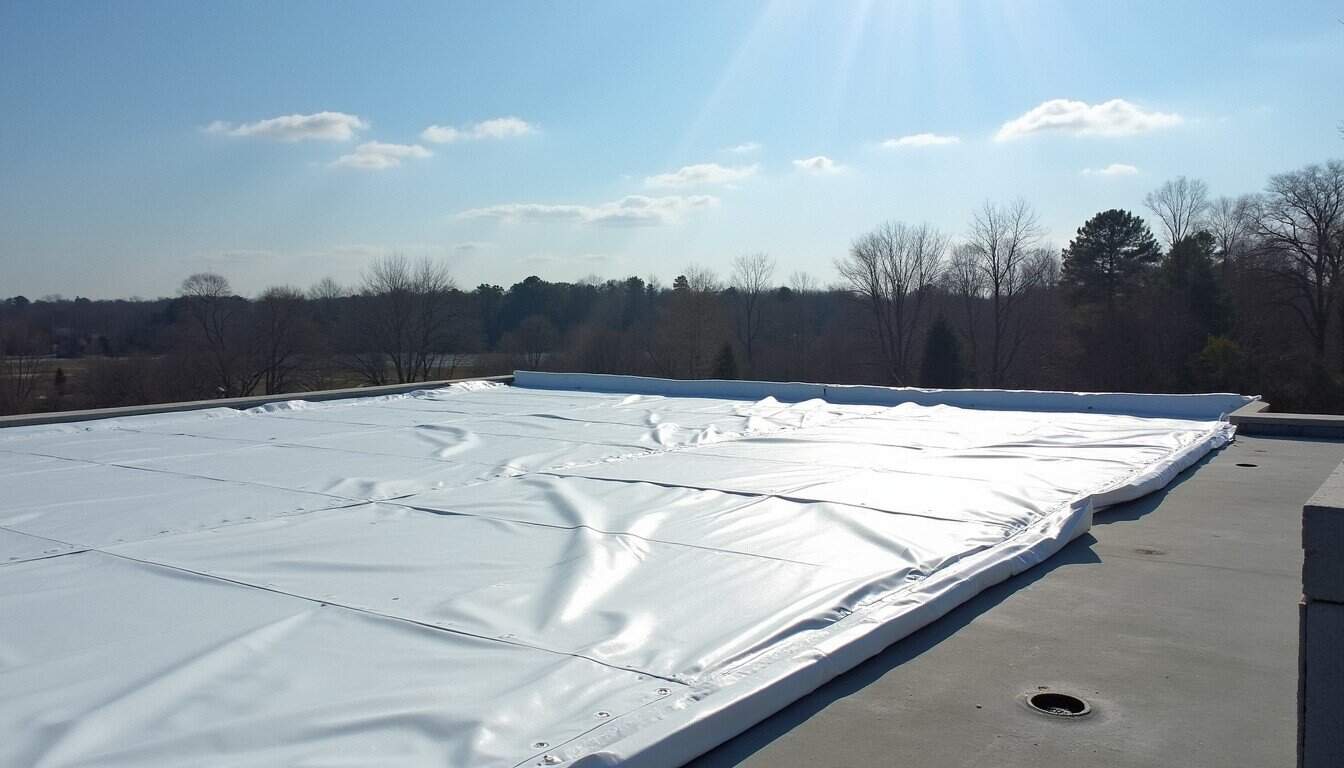
Temporary protection is often the first practical step after a wind event, separate from the permanent repair scope. If a section of membrane has torn open, we can install temporary dry-in or tarping to stop additional water entry while the claim moves through the adjuster process. That emergency work gets its own documentation, distinct from the permanent repair scope, so the claim file is not confused about what was done when.
Wind damage does not always show up the day of the storm. A seam that was stressed but did not fully open can fail weeks later under a lighter gust or routine roof traffic. Where our inspection finds stressed but intact seams near a documented wind event, we note them as watch items in the report, since that context can matter if a related failure shows up after the claim has already been filed.
We are your roofing contractor, not a public adjuster. We document wind and storm damage with photos, measurements, and a written scope that describes what the roof needs, and we meet the adjuster on the roof to walk through those findings. We do not negotiate the settlement or guarantee what the claim will pay.
After a severe thunderstorm or a tornado-warned storm passes through Wichita, getting the roof inspected and documented promptly keeps the evidence clean and gives the claim a stronger starting point.
Wind & Storm Claim Questions We Get in Wichita
What does wind damage look like on a flat commercial roof?
Lifted or torn membrane at the perimeter, loosened or missing edge metal, displaced coping, and stressed seams near rooftop units and curbs are the most common signs.
Does a tornado warning without a direct hit still cause claimable damage?
Yes. Straight-line wind and rotating storms both push high sustained gusts across a roof even without a confirmed touchdown, and that can lift edge metal or open laps without any funnel ever reaching the ground.
How do you document wind uplift for a claim?
We photograph and measure lifted or torn sections, check fastener pull and seam integrity around the perimeter, and note any secondary water entry caused by the opening.
Can debris damage from a storm be part of the same claim?
Often yes. We document impact punctures from blown debris alongside wind-driven uplift so the full storm event is captured in one roof condition report.
Will you help stabilize the roof before the claim is settled?
We can install temporary dry-in or tarping to stop further water entry while the claim moves forward. That work is documented separately from the permanent repair scope.