
Hail-Specific Roof Documentation for Wichita Claims
South-central Kansas sits inside one of the most active hail corridors in the country, and Wichita commercial roofs take hits from that corridor most springs. What separates a clean hail claim from a contested one is usually the quality of the roof-level evidence gathered before the adjuster ever shows up. Bruising and granule displacement fade with wind and rain, so the window to document a hailstorm accurately on a low-slope membrane roof is shorter than most owners expect.
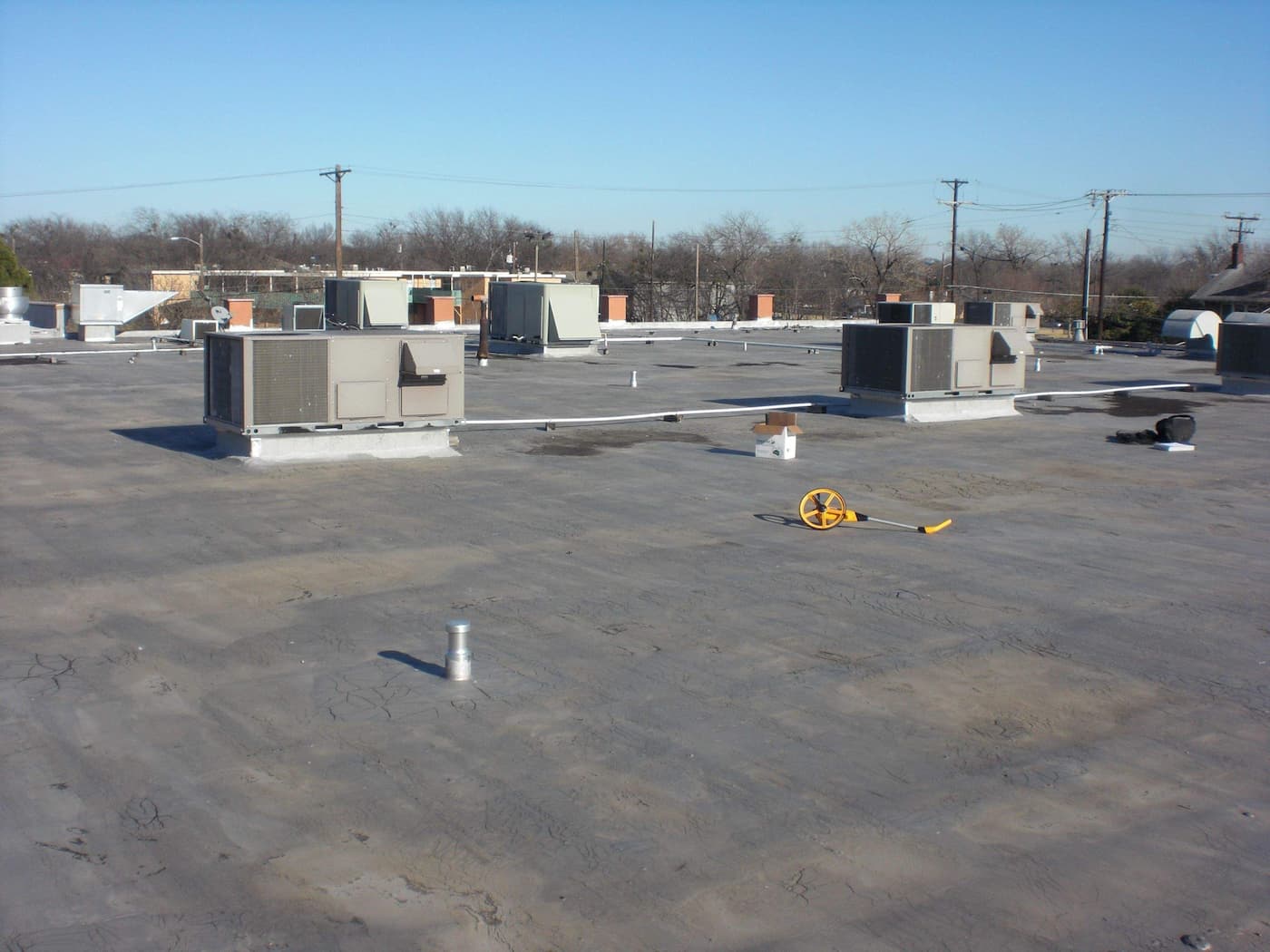
Our inspection starts with a full-field walk, not a spot check. On single-ply membranes, we look for circular bruising, punctures, split laps, and displaced or fractured seam tape, marking each finding against a roof diagram so the pattern is traceable back to a specific storm track rather than described in general terms. On metal roofs we look for dimpling, oil-canning, dented ridge caps, and fastener movement that a photo from the ground would never catch.
Not every hail mark is a repair item, and we say so plainly. Cosmetic granule loss on a cap sheet or light surface scuffing on a membrane is different from a puncture, a cracked insulation board, or a split seam that threatens the roof's water tightness. Treating every mark as damage does not help the claim; it just invites pushback later. We separate what is cosmetic from what is functional and explain the difference in the report itself.
Hail damage on a commercial roof frequently hides below the surface. A membrane can look intact after a storm and still have fractured insulation board underneath that will not show up until foot traffic, ponding water, or the next freeze-thaw cycle finishes the job. Where the visual inspection raises a question, we probe or pull a small core sample to check the insulation and deck condition rather than guessing from the surface.
Meeting the adjuster on the roof is where the documentation pays off. We walk the same path we already photographed, point to the specific bruising, punctures, and displaced metal, and explain the measurements behind the numbers. The purpose is accuracy, not persuasion: we want the scope that gets written to match the roof that is actually up there, area by area, rather than an average condition applied across the whole field.
Around Wichita, the buildings most exposed to hail tend to be the ones with the largest flat roof fields: distribution and cross-dock facilities along the K-96 and I-135 corridors, manufacturing and hangar space near the Spirit AeroSystems and Textron Aviation campuses, and big-box retail and self-storage roofs on the growth edges toward Maize, Goddard, and Park City. A single hailstorm can leave a sharply different damage pattern from one end of a large roof to the other, and the claim file needs to reflect that variation instead of flattening it into one number.
Spring supercells in this region often bring hail and damaging straight-line wind in the same event, sometimes within the same hour. When that happens, we document the hail impact on the field membrane separately from any wind-driven uplift at the perimeter, parapet, or rooftop unit curbs, because those are different failure mechanisms even when they land on one claim.
Age and prior repair history matter to how a hail claim reads. A roof with a known repair log is easier to evaluate than one with no records, because we can distinguish a fresh storm mark from an old patch or a pre-existing soft spot. Where records exist, we reference them; where they do not, we note the roof's general age and condition as context for the new damage.
Timing works against the owner the longer it is ignored. Granule washing, additional storms, UV exposure, and roof traffic all make older hail damage harder to date and harder to separate from unrelated wear. Getting the roof photographed, measured, and temporarily protected soon after the storm date keeps the file clean and keeps the claim timeline from working against the owner.
We are your roofing contractor, not a public adjuster. We document hail damage with photos, measurements, and probe results, and we produce a written scope that reflects what the roof needs. We do not promise a specific payout or manage the claim on the owner's behalf.
If a hailstorm has moved through and the roof needs a documented look before the adjuster arrives, that inspection is worth scheduling promptly, while the damage is still easy to read.
Hail Claim Questions We Get in Wichita
How can you tell hail damage from normal roof wear?
We look for bruising patterns, granule displacement, split laps, and dented metal that follow a storm's direction, then compare that pattern against the roof's known repair history.
Does every hail strike need to be repaired?
No. Cosmetic granule loss on shingles or light surface marking on a membrane is different from a puncture, split seam, or fractured insulation board that actually threatens the roof's water tightness. We document both and explain the difference.
Can hail damage hide until it leaks months later?
Yes. A bruised membrane or cracked insulation board can look intact from the surface and still fail under later foot traffic, freeze-thaw movement, or ponding water. That is part of why we probe suspect areas rather than relying on a visual scan alone.
Will you meet the insurance adjuster on the roof?
Yes. We walk the roof with the adjuster, point to the specific damage we already documented, and explain our measurements. We do not negotiate the settlement.
What roof systems are most vulnerable to Wichita hail?
Single-ply membranes, standing seam and R-panel metal, and older built-up roofs each show hail impact differently, and we adjust our inspection method to the system on the building.