
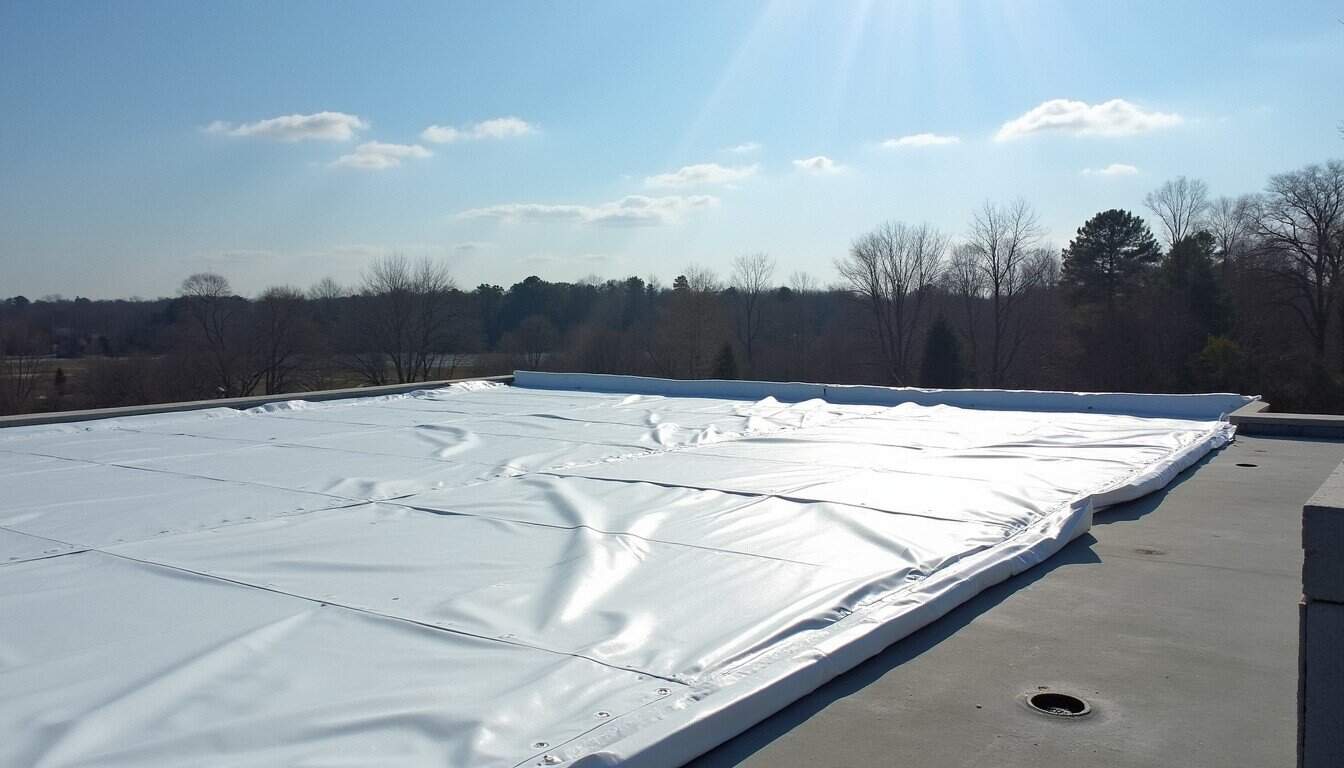
Commercial roofing for warehouses, distribution centers, and industrial storage facilities.
Spirit AeroSystems' massive manufacturing and logistics campus on the east side of Mid-Continent Airport anchors a Wichita warehouse and distribution ecosystem that includes aerospace parts suppliers, agricultural equipment distributors, and regional fulfillment centers serving the southern Great Plains. Wichita's position at the heart of Tornado Alley means that warehouse roofing specifications here cannot be developed using standard inland assumptions, every attachment detail, every edge metal connection, and every penetration flashing must be engineered for wind events that can exceed 150 mph in a tornado touchdown or significant derecho event.
Wind engineering is the primary design driver for all Wichita warehouse roofing. Sedgwick County sits in an area where ASCE 7 wind speed maps indicate design wind speeds of 105-115 mph for Risk Category II industrial buildings, but tornado touchdowns in the Wichita metropolitan area have generated wind speeds far exceeding code design parameters. FM Global approval for roofing systems on warehouses storing high-value inventory is the standard expectation among insurance carriers writing commercial property policies in this market, and the FM approval must match the building's exposure category and occupancy classification. A contractor proposing a non-FM-approved system on a Wichita warehouse should be required to explain the insurance implications before the owner accepts that approach.
Drainage for large Wichita warehouse footprints presents the familiar Great Plains challenge of managing extremely intense but relatively infrequent rainfall events. Wichita's position in the semi-arid transition zone means annual rainfall is modest, around 33 inches, but this precipitation falls largely in intense spring and summer convective storms rather than distributed throughout the year. The practical implication is that roof drainage systems must be sized for peak storm intensity, not average annual rainfall, and internal drain capacity that appears adequate based on monthly rainfall totals may be dramatically inadequate when a severe thunderstorm drops two inches in 30 minutes over a 400,000-square-foot distribution center footprint.
TPO is the dominant choice for new and re-roofed Wichita warehouse applications, with mechanically fastened systems specified to the enhanced perimeter and corner attachment patterns required by ASCE 7 for this wind zone. Ballasted systems are not appropriate for exposed industrial sites in Sedgwick County's wind environment; a significant wind event will scour and redistribute ballast, creating uneven loading that may cause ponding and eventually membrane damage. Fully adhered TPO over rigid polyiso is used for premium applications where maximum wind uplift resistance and energy performance are both priority requirements.
Dock penetrations and loading dock canopy flashings at Wichita warehouses are tested by hailstorms that the region experiences regularly from April through September. Hailstones of one inch and larger are documented annually in Sedgwick County, and the warehouse dock area, where canopy edges and low parapet walls receive direct impact, requires heavier-gauge metal counterflashing than standard interior roof penetrations. Aluminum counterflashing at 0.040-inch minimum thickness withstands hail impact without dimpling or cracking that allows water infiltration at the flashing-membrane interface.
Forklift exhaust and ventilation equipment on Wichita warehouses must be secured against the tornado-adjacent wind events that periodically affect the area. Rooftop exhaust fans not anchored to properly designed and attached curbs have been documented as projectile hazards during severe weather events, and the roof deck openings they leave when detached become direct paths for wind-driven rain into the building. Equipment curbs should be structurally attached to the roof deck framing, not just to the roof membrane system, and the attachment design should be reviewed by an engineer for compliance with the wind load requirements that apply to rooftop equipment in Sedgwick County.
Wichita's energy code follows the Kansas Minimum Standard Building Codes, which have adopted the IECC with Kansas amendments. Climate Zone 5 provisions apply to much of the Wichita area, requiring commercial roof continuous insulation of R-25 or higher depending on the specific assembly type. Most pre-2005 warehouse buildings in Wichita will not meet these insulation requirements without upgrade, and the Evergy commercial efficiency program offers rebates for qualifying insulation improvements that can help offset the cost of bringing an older warehouse roof into energy code compliance during a re-roofing project.
Hail insurance claims management is a specialized knowledge domain for Wichita commercial property owners, and experienced local roofing contractors play a critical role in documenting storm damage for insurance purposes. When a significant hail event occurs, the time window for filing a property damage claim is limited, and contractors who know how to core-sample membrane systems, document bruising and fractures, and present findings in a format that insurance adjusters accept are extremely valuable partners for warehouse owners navigating the claims process. A contractor who simply proposes a membrane replacement without documenting the hail event as the damage cause may leave money on the table for the building owner.
The Wichita commercial roofing market includes several established contractors with decades of experience on large industrial and aerospace-related buildings, which is a significant advantage for warehouse owners seeking qualified bidders. The aerospace manufacturing heritage of the market has created a quality culture and documentation standard in local commercial construction that benefits warehouse owners seeking carefully managed re-roofing projects. Contractors familiar with Spirit AeroSystems' and Textron Aviation's facility standards bring institutional rigor that translates directly to better outcomes on industrial warehouse roofing projects across the Wichita metro.
Roof questions this work should answer
Where is the roof vulnerable?
Drainage, seams, curbs, edge metal, penetrations, traffic paths, and prior repairs should be clear enough to guide the next step.
What has to happen first?
Active water entry, tenant protection, safe access, and storm documentation are handled before long-range pricing is finalized.
How should ownership compare options?
Repair, coating, recover, and replacement choices should be compared against roof age, wet insulation, building use, and the cost of future disruption.