
Solar-Ready Roofing for Wichita Commercial Buildings
Most of the solar conversations we walk into here start the same way: a property owner near the Spirit AeroSystems complex on the south side or along the warehouse rows off I-135 has a signed letter of intent from a PV developer, a one-line production estimate, and absolutely no plan for the roof those panels are about to live on for the next quarter century. We exist to close that gap. We are roofers, not a solar sales outfit, and what we bring to a rooftop array is the part everyone forgets until it leaks: the membrane, the attachments, the load math, and the warranty paperwork that keeps two trades from blaming each other later.
An array spreads weight and wind load across the single most exposed plane of your building. Get the racking, the penetrations, and the uplift right and the system disappears into the roof for decades. Get them wrong and you are pulling modules off a failed membrane three years in, paying twice for a reroof that should have been sequenced correctly the first time. Sedgwick County does not give roofs an easy ride, and bolting electrical hardware to one without thinking it through is how good solar economics quietly turn upside down.
The Membrane Decides Everything
Before a single racking row gets laid out on a drawing, we want to know what the array is sitting on and how much life is left in it. We core the existing assembly, take moisture readings across the field, and hand the owner a straight remaining-life number. The reason is blunt: detaching and resetting a PV system to replace a worn-out roof underneath it can add five figures to a reroof, and that cost is entirely avoidable with one honest assessment at the front of the project.
If the roof has a decade or more in it, we detail the existing membrane to host the array. If it is closing in on the end, we say so and recommend reroofing first, then setting the panels onto a fresh substrate that will outlast them. On Wichita's older mid-century commercial stock near the rail corridors, where ballasted and aged built-up roofs are still common, that recommendation comes up a lot, and it is almost always the cheaper path over the life of the system.
Membrane type and thickness matter more than owners expect. A reflective white TPO or PVC roof is the membrane we want under an array: it runs cooler, which helps panel output, and at 60-mil or heavier it stands up to the foot traffic and point loads a solar crew brings. EPDM can carry an array, but it absorbs heat and scuffs more easily under racking feet, so it gets protection mats and walk pads anywhere the install crew will travel. And before anyone commits to a layout, we confirm in writing that the membrane manufacturer permits a solar attachment on that specific roof, because plenty of warranties say otherwise.
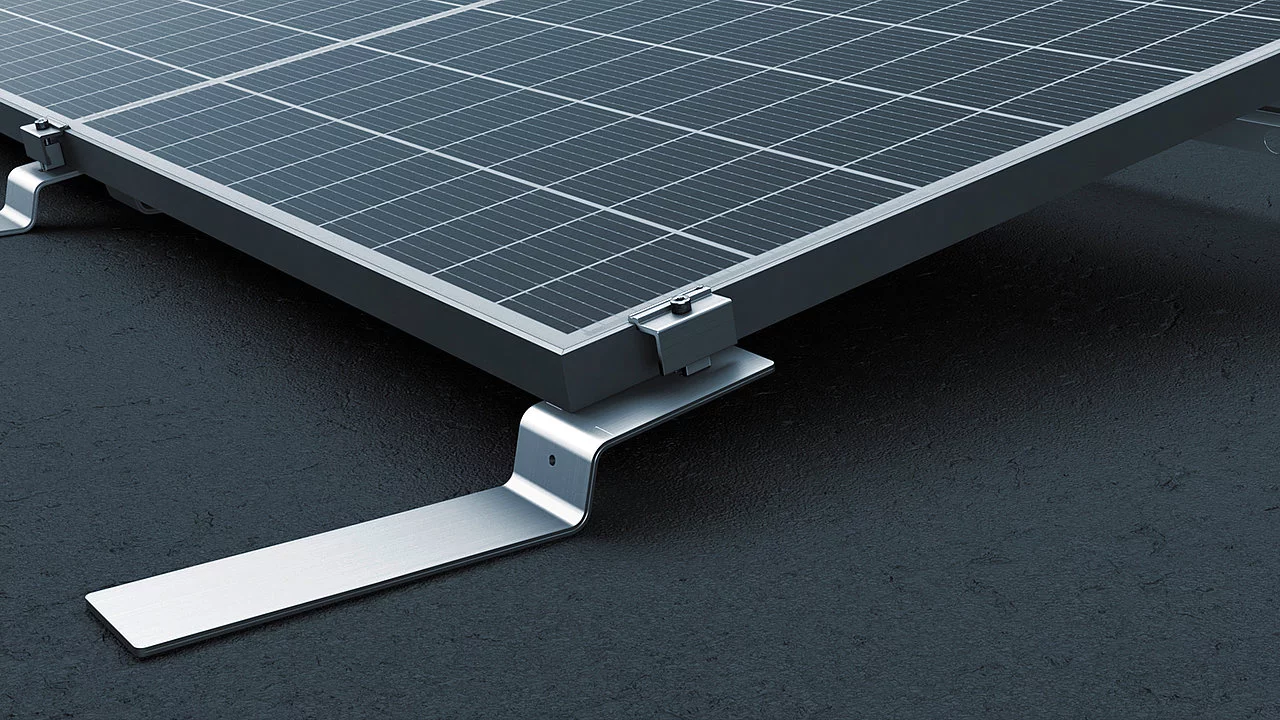
There are two ways to keep an array on the roof in a wind event, and both are roofing decisions before they are electrical ones. Ballasted racking holds the system down with weighted trays so nothing punctures the membrane, which preserves the roof but loads the deck heavily and only works where the structure can carry it. Mechanically attached racking anchors through the membrane into the deck, which turns every foot into a penetration that has to be flashed and sealed like a curb. Wichita's wind exposure means uplift here is never a formality, so we coordinate with the structural engineer and the racking supplier to match the attachment method to both the wind load and what the building can physically bear, and we flash every anchored standoff ourselves rather than trusting a generic boot kit from the solar crew.
Weight and Uplift on the Plains
Dead load and wind uplift are the two structural numbers that govern any rooftop array in this part of Kansas. A fully ballasted system can add several pounds per square foot across the entire roof, and an older Wichita warehouse deck may not tolerate that without reinforcement. An attached system adds little weight but concentrates uplift at each anchor, and in a market that sees the straight-line winds and severe spring storms Sedgwick County is known for, those forces are very real. We make sure the uplift design is documented and that conduit, combiner boxes, and inverters all land on flashed supports instead of resting directly on the membrane, where they pond water and abrade the surface over time.
The warranty trap is the one owners discover too late and at the worst moment. A no-dollar-limit membrane warranty can be voided the instant an unauthorized party penetrates or alters the roof, and a solar installer drilling standoffs without the roofer involved is exactly that party. We head it off by getting the attachment plan reviewed and approved by the membrane manufacturer, performing or directly supervising every penetration so the roofing warranty stays intact, and documenting the work so the solar equipment warranty and the roofing warranty do not end up pointed at each other after the first leak. When two trades share one roof, someone has to own the seam between them. On our projects, that is us.
- Pre-install core sampling and remaining-life assessment so the array outlives the membrane beneath it
- Membrane compatibility review and substrate prep for reflective single-ply systems rated for solar
- Roofer-performed flashing on every mechanically attached standoff, conduit run, and equipment support
- Structural coordination on ballast weight and documented wind-uplift design for Wichita conditions
- Manufacturer warranty review and sign-off that keeps both the roofing and solar warranties valid
How a Solar Roof Project Runs With Us Involved
We open with an assessment of the existing roof and a clear recommendation: proceed on the current membrane, wait, or reroof first. Once the path is set, we sit down with the PV developer before construction starts to map the racking layout against the roof's drains, curbs, and existing penetrations, settle the attachment method, and route conduit so it never crosses a drainage path. During the install the membrane is finished and inspected before any racking goes down, our crew handles or oversees the penetrations, and we run a final water-tightness check before the system is energized. The outcome is one assembly that works for its full service life, not two systems quietly fighting each other on top of your building.
Bring Us In Before You Sign the Array
If you own or manage commercial property anywhere from Old Town and downtown to the industrial parks off South Hydraulic and the retail corridors along East Kellogg and Rock Road, and solar is on the table, get us involved before the PV contract is signed. The roof decisions made in the first week of planning are what determine whether that array pays off the way the spreadsheet promised or quietly forces a premature reroof down the line.
Roof questions this work should answer
Where is the roof vulnerable?
Drainage, seams, curbs, edge metal, penetrations, traffic paths, and prior repairs should be clear enough to guide the next step.
What has to happen first?
Active water entry, tenant protection, safe access, and storm documentation are handled before long-range pricing is finalized.
How should ownership compare options?
Repair, coating, recover, and replacement choices should be compared against roof age, wet insulation, building use, and the cost of future disruption.