
Roofing for Wichita Labs and Pharma Buildings Where a Leak Is Never Just a Leak
On most commercial buildings, a roof leak is an inconvenience. Over a cleanroom, a compounding suite, or a bench full of analytical instruments, the same leak can ruin a batch, contaminate a controlled space, and force a documented deviation. We approach pharmaceutical and laboratory roofing in Wichita with that stakes in mind. The work is less about square footage and more about protecting what is underneath the deck and keeping the building's controlled environment intact while we do it.
Wichita's research and life-science footprint is concentrated in a handful of places: the Wichita State Innovation Campus and the surrounding Bardo corridor on the northeast side, the diagnostic and clinical labs clustered around the hospital campuses on the central and east sides, and the specialty and contract-manufacturing tenants tucked into the I-135 and Kellogg business parks. These buildings are different from a warehouse next door in ways that matter on the roof, and we plan for those differences before the first crew shows up.
Access and Credentialing Come First, Not Last
A regulated building controls who gets in, when, and with what paperwork. A crew that arrives without pre-cleared credentials does not just lose a day; on a controlled-substance or GMP site it can trigger a security or compliance event nobody wants. We handle credentialing, background coordination, and escort requirements during pre-construction so the full crew is cleared before mobilization. Where a facility runs an Environmental Health and Safety office or a biosafety committee, we route our safety plan and material submittals through them on their timeline, not ours.
The Rooftop Is a Maze of Critical Equipment
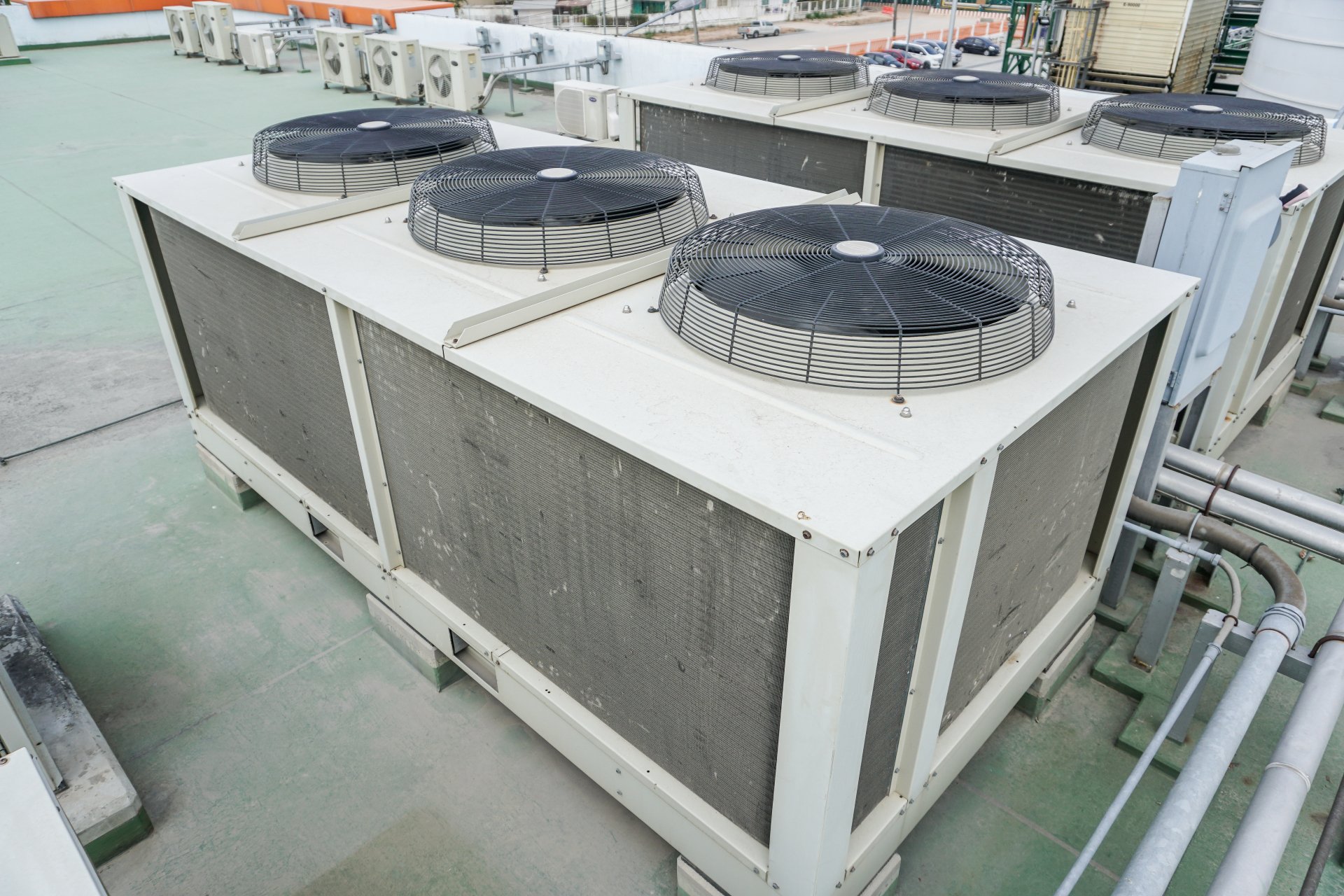
Pharma and lab roofs carry some of the densest mechanical decks in commercial construction. You will find dedicated air handlers holding cleanroom pressure and particle counts, chemical fume and solvent exhaust stacks, biosafety exhaust with HEPA filtration, process chillers, and building-automation conduit, all penetrating the membrane in tight clusters. Two things drive our scope here:
- Cleanroom pressure differentials have to stay intact. Any flashing work near a cleanroom supply or exhaust connection gets scheduled against the facility's HVAC maintenance windows, and we confirm the space recovers its pressure and particle spec after we are done.
- Every curb, duct boot, and conduit run is flashed and documented as its own item. On a building where the MEP team has to trust the roof completely, there is no room for a generic, undocumented penetration detail.
Corrosive Exhaust Eats the Wrong Membrane
Lab exhaust is the quiet killer of pharmaceutical roofs. Solvent, acid, and process vapors leave the stack, condense on the stack walls and the downwind membrane, and create localized chemical attack that a standard warranty specifically excludes. Before we pick a membrane for the zone around your exhaust stacks, we identify what is actually coming out of them with your MEP team and check it against the manufacturer's chemical-resistance data.
For most lab and pharma applications we specify a reinforced PVC, typically 60-mil, because it tolerates that vapor far better than standard TPO. In the splash and condensation zone immediately around solvent or acid stacks, we step up to a higher-grade membrane and add sacrificial protection so the field roof is not aging on the manufacturer's chemical clock. Near GMP production and cold-storage vaults, the detailing tightens further because the consequence of moisture in the assembly is so high.
Building Types We Roof in This Sector
Pharmaceutical Manufacturing and Compounding
GMP production areas, sterile compounding, and controlled-substance handling carry the strictest access and documentation requirements. Schedules are geared to production and validation windows, and the closeout package has to satisfy a quality team, not just a facilities manager.
Clinical and Diagnostic Laboratories
The diagnostic labs around Wichita's hospital corridors run continuously and cannot tolerate dust, vibration, or a temporary leak over instrumentation. We sequence tear-off and dry-in so no critical bench is ever exposed, and we coordinate vibration-generating work against testing schedules.
University and Biotech Research
Research buildings, including the labs tied to the Innovation Campus, often stack multiple PI suites under one roof, each with its own exhaust and its own program. We coordinate with the biosafety and EHS offices and treat each suite's exhaust and pressure needs as a separate constraint rather than averaging them across the building.
Keeping the Inside Clean While the Outside Comes Off
The risk on a lab roof is not only rain; it is the dust, debris, and pressure changes that ordinary roofing work throws off. On a controlled building, a single tear-off over an active cleanroom can pull contamination into a space that took validation effort to certify. We sequence the work so no critical room is ever under an open deck, dry each section in before moving on, and isolate the work area from interior air paths where a penetration opens near a supply or return. Where vibration or core drilling has to happen above sensitive instrumentation, we coordinate the timing against the lab's own runs so a sequencer or a balance is not reading our roof crew. Kansas weather forces the discipline further. Spring and summer thunderstorms come up fast and hard over south-central Kansas, and a building that cannot afford a leak cannot afford an optimistic forecast either, so we keep the open footprint small and the dry-in tight every single day.
Recover or Replace Over a Space You Cannot Expose
On a typical building the recover-versus-replace question is mostly about budget and code. Over a cleanroom or a vault full of instrumentation, the calculus changes, because a tear-off carries more interior risk than it does on a warehouse. We core the assembly to read the existing insulation layers, the moisture content, and the total weight in place, then weigh a recover that keeps the existing deck closed against a full replacement that opens it. Where the existing membrane is sound and the assembly is dry, a recover can be the lower-risk path precisely because it limits how much of the envelope is ever open above a controlled room. Where the assembly is wet or the deck is compromised, we plan the replacement in tight phases with interior protection so the exposure window over any one space stays as short as possible. Either way the decision is driven by what is under the deck, not by a default rule.
Documentation That Survives an Audit
A pharma facility closeout is a deliverable, not an afterthought. We assemble contractor qualification records, the site-specific safety plan, material submittals reviewed by the facility engineer, daily work logs, manufacturer installation documentation, system certification where it is required, and registered warranty paperwork, and we submit it through the facility's quality management system in the format they require. If an inspector or an internal auditor later asks for proof of how the roof was built and maintained, the answer is already on file.
Plan a Lab or Pharma Roof Project in Wichita
If you manage a regulated building in the Wichita area and the roof is approaching the end of its service life, the worst time to find out is during a leak over your most sensitive space. We will walk the roof, inventory the penetrations and exhaust zones, coordinate the access and HVAC constraints with your team, and deliver a scope and a documentation plan built for a building where the roof has to be trusted completely.
Roof questions this work should answer
Where is the roof vulnerable?
Drainage, seams, curbs, edge metal, penetrations, traffic paths, and prior repairs should be clear enough to guide the next step.
What has to happen first?
Active water entry, tenant protection, safe access, and storm documentation are handled before long-range pricing is finalized.
How should ownership compare options?
Repair, coating, recover, and replacement choices should be compared against roof age, wet insulation, building use, and the cost of future disruption.