
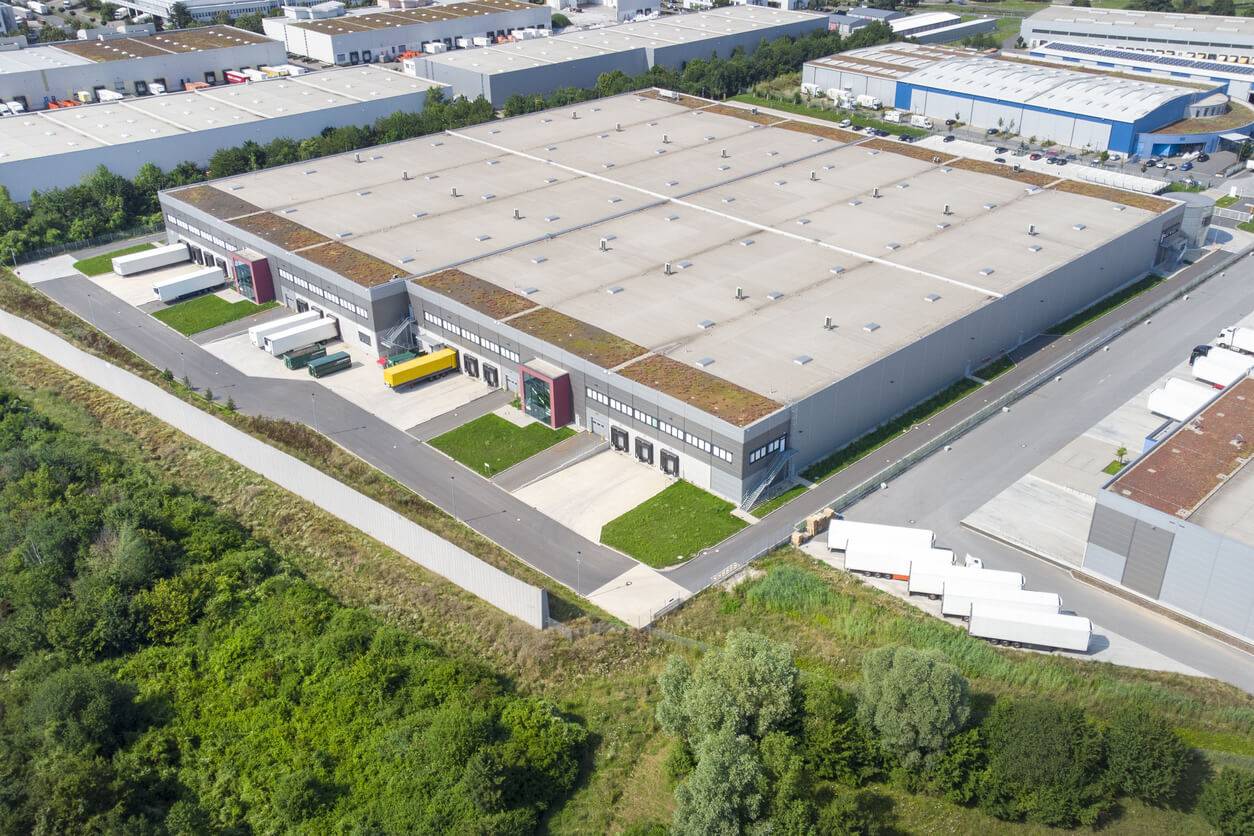
Roofing Wichita's Mixed-Use Buildings
Downtown Wichita has spent the last decade turning warehouses, old retail blocks, and surface parking into buildings that do three or four jobs at once. Apartments sit over storefronts in the Douglas Design District. Old Town pairs ground-floor restaurants and offices with lofts above. New construction near the Arkansas River and along the Commerce Street arts corridor stacks residential on top of retail and structured parking. Each of these buildings asks more of a roofing contractor than a single-purpose box ever does, because the roof is no longer one flat plane, it is several different waterproofing problems sharing one address.
We treat a mixed-use project as a vertical system, not a horizontal surface. A retail floor with restaurant tenants below, residents asleep three floors up, and a parking deck wrapped into the base all change what the roof and the waterproofing above them have to do. Get the relationship between those uses right and the building stays dry and quiet for decades. Get it wrong and a single missed detail floods a tenant space or a unit and turns into a liability claim. That difference is the whole job.
The Roof Is Not the Only Thing Holding Water Out
The biggest mistake on a mixed-use building is treating a podium deck or a plaza like ordinary commercial roofing. They are not the same assembly and they do not fail the same way.
The slab between parking or retail at grade and the residential floors above, the podium, carries foot traffic, planters, pavers, and sometimes vehicle loads. That calls for a traffic-bearing waterproofing membrane, a drainage composite, root barriers where there is landscaping, and a load path worked out with the structural engineer. Standard single-ply roofing membrane laid on a plaza deck typically starts leaking within a few years because it was never built to take hydrostatic pressure under planters or the abrasion of constant foot traffic. We specify and install the deck assembly that actually belongs there, and we coordinate it with whoever is setting the finish surface above.
The top of a Wichita residential-over-retail building usually combines a low-slope membrane field, a mechanical penthouse, elevator overrun enclosures, and increasingly a rooftop amenity deck with seating and grills for the tenants. The amenity area needs the same traffic-bearing assembly as a podium, not a maintenance-grade membrane that residents will walk across daily. Parapet heights, scupper and drain placement, and the flash-through at every penthouse and overrun all get detailed before the first roll goes down.
Working Over Occupied Retail and Residents
A renovation roof on an occupied mixed-use building is a logistics job before it is a roofing job. Restaurants are serving lunch under the deck, retail is open during the day, and residents are home in the evening, and Wichita's downtown noise expectations and the building's own lease terms put real limits on when loud work can happen. We build a phasing and notification plan before mobilizing: noise, vibration, and dust containment over occupied areas; a freight and elevator access plan worked out with building management so a resident move-in or a restaurant delivery is not blocked; and written daily dry-in so management knows the work zone is watertight before the crew leaves. We never demobilize over an open assembly with people living and working underneath it.
Coordinating the Team and the Warranties
Mixed-use work rarely happens in isolation. On a renovation or ground-up project we coordinate with the general contractor, the MEP trades stacking equipment on the roof, the structural engineer of record, and often a building-envelope consultant, all at once. We know the submittal sequence, the waterproofing mock-up and flood-test protocols owners specify on these buildings, and the inspection hold points manufacturers require to issue a warranty.
Warranty coordination is where mixed-use buildings get messy, and where we earn our keep. A single building can carry a roofing membrane warranty on the upper field, a separate traffic-deck warranty on the podium and amenity areas, and tie-ins to the wall waterproofing, often from different manufacturers with different inspection requirements. We map the warranty lines before installation so there are no gaps at a transition and no finger-pointing later about whose system failed. The owner ends up with one coherent set of documents instead of a folder of disconnected certificates.
Adaptive Reuse and the Old Buildings Downtown
A large share of Wichita's mixed-use stock is not new construction at all, it is old warehouses, department stores, and office blocks along Douglas and through Old Town that have been converted to lofts over retail. These buildings carry roofing histories that a ground-up project never has. Underneath a tired surface membrane we often find layers of forgotten built-up roofing, abandoned penetrations from equipment that was removed decades ago, brick parapets that have shifted and cracked their coping, and structural decks that were never designed for the mechanical loads a modern residential conversion drops on them. We core-sample and run a moisture scan before recommending tear-off versus recover, because recovering over a saturated old assembly only buries the problem above someone's living room. Parapet and coping repair is frequently as much of the scope as the field itself on these conversions, since the wall-to-roof joint on a century-old masonry building is where most of the water gets in. We also coordinate closely with the structural engineer when new rooftop units, amenity decks, or solar arrays are added during a conversion, so the new load and the new waterproofing are designed together rather than discovered in conflict.
- Podium and plaza decks built as traffic-bearing waterproofing assemblies, not single-ply roofing
- Rooftop amenity decks detailed for daily resident foot traffic
- Phased work over occupied retail and residential with noise, dust, and access controls
- Coordination with the GC, MEP, structural engineer, and envelope consultant
- Mock-ups and flood testing per the project specification
- Warranty lines mapped across membrane, deck, and wall systems before installation
Talk to a Wichita Mixed-Use Roofing Crew
Whether you are putting a new membrane on an Old Town conversion, waterproofing a plaza deck on a new downtown build, or sorting out where a leak is getting into a residential floor, we will walk the building, separate the roofing scope from the waterproofing scope, and give you a plan that holds together across every use under one roof. Reach out to set up an assessment anywhere in the Wichita area.
Roof questions this work should answer
Where is the roof vulnerable?
Drainage, seams, curbs, edge metal, penetrations, traffic paths, and prior repairs should be clear enough to guide the next step.
What has to happen first?
Active water entry, tenant protection, safe access, and storm documentation are handled before long-range pricing is finalized.
How should ownership compare options?
Repair, coating, recover, and replacement choices should be compared against roof age, wet insulation, building use, and the cost of future disruption.