
Roofing for Wichita Food and Beverage Plants, Inside and Out
A food plant pushes on its roof from two directions at once. From above, it takes the same Kansas hail, wind, and heat as any building. From below, washdown humidity, refrigeration vapor, and warm process air rise constantly toward the deck, and the rooftop is loaded with condensing units, exhaust hoods, and refrigeration equipment that most buildings never carry. We roof these facilities in Wichita knowing that a failure over an active line is not a maintenance ticket; it is a potential food-safety event that pulls in the plant's quality team and the regulator. The whole point of our planning is to keep that from ever happening.
Food and protein processing runs deep in this region. The plants and cold-storage operations along the I-135 and South Broadway industrial belts, the producers and distributors in the Stockyards district and along the rail spurs on the near south and west sides, and the bakeries, beverage, and specialty processors scattered through the metro all share the same roofing pressures. Wichita's place in the Kansas ag and protein supply chain means a lot of square footage sits over freezers, blast cells, and continuous production, and those buildings need a roofer who understands what is happening under the deck.
Not Every Roofing Material Belongs Over Food
The membrane decision in a food plant starts with whether the product is even acceptable over a production environment, not with price. USDA- and FDA-regulated areas restrict what can sit above a food zone, and that restriction reaches past the membrane to the adhesives, primers, and sealants in the flashing details. Many ordinary roofing adhesives are solvent-based and have no business in a food production space. White TPO and PVC single-ply are generally workable over enclosed processing areas, but we confirm the exact product and installation method against the plant's food-safety plan before anything goes down.
- Membrane, adhesive, and sealant selections checked for food-environment acceptability with the plant QA team, not assumed.
- Low-odor, low-VOC, or mechanically attached details specified where solvent fumes could reach a production area.
- White, reflective membranes that also ease the rooftop cooling load created by all that refrigeration equipment.
The Cold Chain Lives in the Roof Assembly
Freezer rooms, chill rooms, and blast-freezing cells create a roofing problem you cannot see from the outside. The roof over a refrigerated space has to hold the thermal line and manage vapor drive, or warm, moist interior air migrates up and condenses inside the assembly against the cold deck. That hidden condensation corrodes steel deck and waterlogs insulation for years with no leak ever showing on the ceiling, until the deck is compromised. Tapered insulation over refrigerated areas has to be designed around the real operating temperatures of each space and the vapor-drive direction for the Wichita climate, where a hard winter and a humid summer push moisture both ways across the year.
Drainage matters more here than almost anywhere. Ponded water over a freezer adds thermal load to the refrigeration system and accelerates deck corrosion, so we lay out tapered systems that move water to scuppers or interior drains at the low point of every bay and confirm the drain layout matches how the refrigeration below is actually run.
The Plant Schedule Drives the Roof Schedule
Most Wichita processors run two or three shifts with a single weekly sanitation window as the only stretch when the floor is down. Any work that opens the envelope over an active production area gets confined to those windows, with the production lead and QA manager confirming the floor below is cleaned and protected before we cut anything. We phase the project around the plant's calendar, coordinate refrigeration-adjacent work with the maintenance team so the cold chain is never put at risk, and dry the building in section by section so there is no open deck over a Kansas thunderstorm.
When a Leak Happens During Production
If water does get in over a running line, the clock starts immediately. Our emergency response for food plants includes a 24-hour contact, priority mobilization for a temporary dry-in, and the documentation the plant needs for its own incident reporting and product-hold decision. That protocol is part of every food processing roof we hand over, not a service we improvise after the fact.
Carrying the Weight of All That Refrigeration
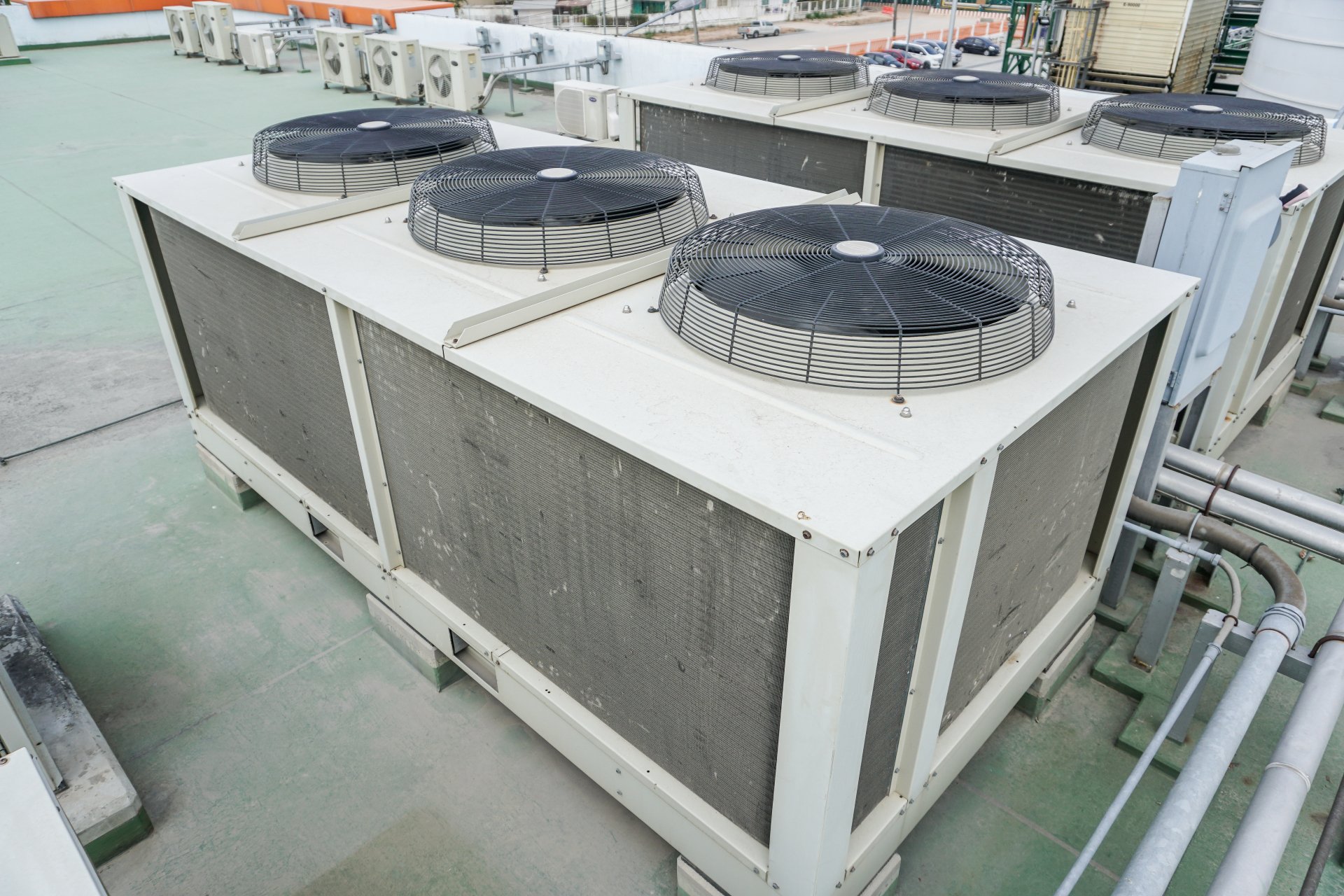
The rooftop of a food plant is not just busy, it is heavy. Banks of condensing units, evaporative coolers, ammonia or glycol refrigeration equipment, exhaust hoods, and make-up air units all sit up there, and they vibrate, they drip condensate, and they get serviced constantly. Each one needs a curb and flashing built for its load and its service traffic, not a generic detail. We inventory every unit, confirm the structure can carry it, and route reinforced walkway pads to the equipment so the refrigeration techs who are up there weekly are not wearing through the membrane on the way to a compressor. Condensate and defrost lines get particular attention, because a refrigeration drip that finds a seam will keep an area of the roof wet year-round even when it never rains. Where new equipment has been added over the years without a load review, we flag it, because a roof that was fine when the plant opened may be carrying far more than its original deck was designed for.
Kansas Weather on a Building That Cannot Flood
South-central Kansas hands a roof everything: spring hail that dents and splits aging membrane, straight-line winds and the occasional severe storm rolling across open country, brutal summer heat baking the surface, and a hard freeze-thaw cycle every winter that works at seams and flashings. On a food plant those weather realities collide with a building that cannot tolerate a flood over product. A reflective, properly fastened membrane stands up to the heat and the uplift, but the bigger protection is drainage and dry-in discipline so a single storm during a reroof never reaches the floor. We design the wind uplift to the building's exposure, specify a membrane thickness that survives hail in this region rather than the minimum on the spec sheet, and keep the open work footprint small and watertight through the volatile spring and summer storm season.
Roofing as Part of Your Inspection Record
Roof condition is a standard line item in USDA and FDA facility inspections. Inspectors look for leak staining, condensation, and deterioration that could become a moisture entry point over product. We provide condition documentation, photographs, and repair records your QA team can put in front of an inspector to show the roof is being maintained proactively rather than reactively. For multi-site processors, those reports also feed straight into capital planning across the portfolio.
Talk to a Wichita Food Plant Roofer
If you run a processing, cold-storage, bakery, or beverage operation in the Wichita area, we will walk the roof, core the assembly over your refrigerated and high-humidity zones, confirm material acceptability with your quality team, and build a phasing plan that fits your sanitation windows. The result is a roof that holds the cold chain, keeps washdown and process moisture out of the assembly, and protects the product running underneath it.
Roof questions this work should answer
Where is the roof vulnerable?
Drainage, seams, curbs, edge metal, penetrations, traffic paths, and prior repairs should be clear enough to guide the next step.
What has to happen first?
Active water entry, tenant protection, safe access, and storm documentation are handled before long-range pricing is finalized.
How should ownership compare options?
Repair, coating, recover, and replacement choices should be compared against roof age, wet insulation, building use, and the cost of future disruption.